 PLD Protection
In every industry where human safety is exposed to potential hazards—whether near water, at height, in confined spaces, or in emergency scenarios—lifesaving equipment stands as an irreplaceable safeguard. From marine and offshore operations to construction, mining, oil & gas, and even public facilities, lifebuoy series, lifejacket series, and professional lifesaving tools form a critical safety net, mitigating risks, preventing fatalities, and ensuring compliance with global safety standards. This article explores the core role of lifesaving equipment across diverse industries, the specialized designs of its key components, and the evolving trends shaping its development.
The Indispensable Role of Lifesaving Equipment Across Industries
Lifesaving equipment is not merely a regulatory requirement; it is a moral and operational imperative that directly impacts workforce safety, organizational reputation, and operational continuity. Every industry faces unique life-threatening risks—water immersion, falls, entrapment, or sudden emergencies—and tailored lifesaving solutions are essential to addressing these challenges. Whether it is a lifebuoy thrown to a worker overboard, a lifejacket worn by an offshore technician, or a lifesaving tool used to extricate a trapped employee, these products are designed to buy time, facilitate rescue, and save lives when every second counts.
Across sectors, the primary goal of lifesaving equipment remains consistent: to prevent drowning, reduce injury severity, and enable rapid rescue. However, industry-specific hazards demand specialized designs, materials, and functionalities—ensuring that the equipment performs reliably in the harshest and most unpredictable environments.
Key Components of Lifesaving Equipment: Tailored for Industry-Specific Needs
Lifesaving equipment encompasses a range of products, with lifebuoy series, lifejacket series, and lifesaving tools being the most critical and widely used across industries. Each category is engineered to address specific risks, with designs optimized for the environments in which they operate.
1. Lifebuoy Series: The First Line of Defense Against Drowning
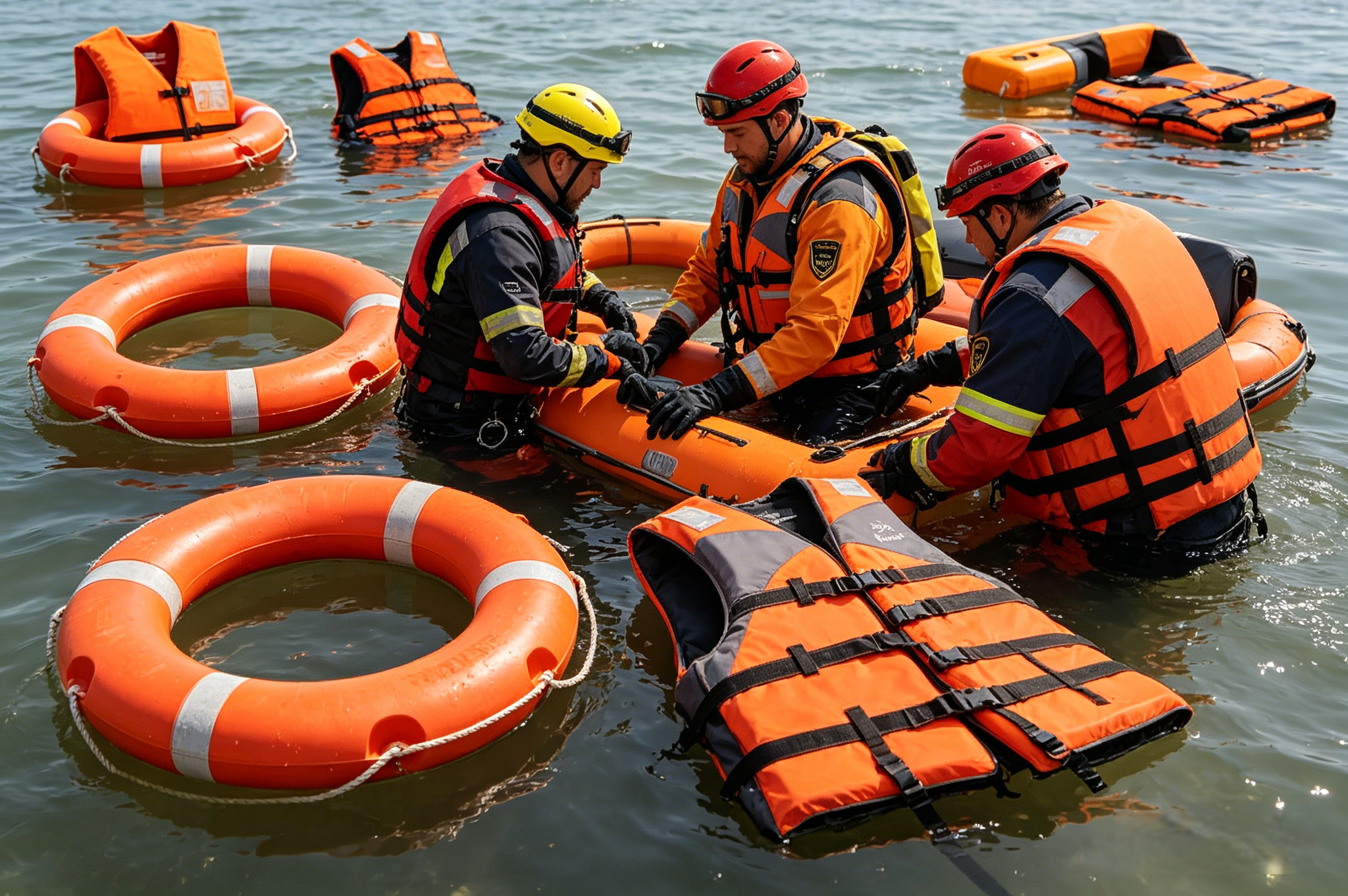
Lifebuoy series—also known as life rings or buoyant rings—are universal lifesaving devices designed to provide flotation and visibility for individuals in water. They are a staple in any industry with water exposure, including marine, offshore oil & gas, ports, construction (near water bodies), and even public spaces like swimming pools and water treatment plants.
Modern lifebuoy series are constructed from high-density polyethylene (HDPE) or polyurethane, ensuring buoyancy, durability, and resistance to UV radiation, saltwater corrosion, and extreme temperatures. Key features include bright orange or yellow coloring for high visibility, reflective strips for low-light conditions, and a grab line for easy handling by rescuers or victims. Some industrial-grade lifebuoys are equipped with additional features, such as built-in whistles for signaling, LED lights for night rescue, or tether lines for controlled retrieval—critical for offshore or rough water environments.
In the marine and offshore industries, lifebuoys are strategically placed on vessels, platforms, and docks, complying with SOLAS (International Convention for the Safety of Life at Sea) standards. In construction, they are deployed near rivers, lakes, or construction pits filled with water, while in public facilities, they serve as a quick-response tool for accidental water immersion.
2. Lifejacket Series: Personal Flotation for High-Risk Environments
Lifejacket series—personal flotation devices (PFDs)—are worn by individuals operating in or near water, providing continuous buoyancy and keeping the wearer’s head above water in case of immersion. Unlike lifebuoys, lifejackets are personal, portable, and tailored to the specific risks of each industry, making them essential for offshore workers, mariners, construction crews, miners, and even emergency responders.
Industry-specific lifejacket series vary significantly in design: – Marine and Offshore Lifejackets: Built for rough seas and long-duration wear, they feature buoyant foam cores, adjustable straps for a secure fit, and integrated harnesses for connection to rescue lines. Some models include inflatable chambers (activated manually or automatically) for enhanced buoyancy, as well as pockets for storing signaling devices (whistles, flares) and personal items. – Construction and Mining Lifejackets: Designed for workers near water or in flood-prone areas, they are lightweight, breathable, and compatible with other PPE (hard hats, safety harnesses). They often include reflective accents for visibility on job sites and are resistant to abrasion from tools and equipment. – Emergency Response Lifejackets: Used by firefighters, coast guards, and rescue teams, these are highly durable, waterproof, and equipped with features like head support, thermal insulation (for cold water), and attachment points for rescue ropes.
All lifejacket series must comply with international standards (e.g., ISO 12402, USCG Type Approval) to ensure buoyancy, durability, and performance—critical for protecting workers in life-threatening situations.
3. Lifesaving Tools: Enabling Rapid Rescue and Intervention
Lifesaving tools complement lifebuoys and lifejackets, providing rescuers with the equipment needed to reach, extricate, and stabilize victims in emergencies. These tools are designed for versatility, durability, and ease of use, adapting to diverse industry hazards and rescue scenarios.
Common lifesaving tools across industries include: – Rescue Ropes and Harnesses: Used in marine, construction, and mining to retrieve victims from water, heights, or confined spaces. They are made from high-strength, corrosion-resistant materials (e.g., nylon, polyester) and feature adjustable buckles for secure attachment. – Rescue Hooks and Grappling Devices: Ideal for reaching victims at a distance, these tools are used to pull individuals to safety or retrieve lifebuoys in rough water. – First Aid Kits for Water Emergencies: Equipped with items like CPR masks, bandages, and antiseptic supplies, these kits are essential for treating injuries before professional medical help arrives. – Underwater Rescue Tools: Used in marine and offshore industries, including dive masks, snorkels, and underwater communication devices, enabling rescuers to reach victims in shallow or deep water. – Extrication Tools: For construction and mining, tools like hydraulic cutters and spreaders help free victims trapped in debris or equipment, often used in conjunction with lifejackets or flotation devices in flood scenarios.
Industry-Specific Applications: How Lifesaving Equipment Protects Workers Worldwide
Lifesaving equipment is tailored to the unique risks of each industry, ensuring optimal performance and compliance. Here’s how it is applied across key sectors:
-
Marine and Shipping: Lifebuoy series are mounted on all vessels (cargo ships, passenger boats, fishing vessels) and docks; lifejacket series are mandatory for all crew members and passengers; lifesaving tools like rescue ropes and flares are stored in easily accessible locations, complying with SOLAS and IMO (International Maritime Organization) standards.
-
Oil & Gas (Offshore and Onshore): Offshore platforms use heavy-duty lifebuoys, inflatable lifejackets with harnesses, and underwater rescue tools; onshore refineries near water bodies deploy lifebuoys and lifejackets for workers handling chemicals or working near storage tanks.
-
Construction: Lifebuoy series are used near water pits, rivers, or coastal construction sites; lifejackets are worn by workers involved in bridge construction, dredging, or flood control; lifesaving tools like rescue ropes and extrication equipment are used for fall or entrapment rescues.
-
Mining: Lifejackets are essential for workers in underground mines prone to flooding; lifebuoy series are deployed near mine water reservoirs; lifesaving tools like rescue hooks and first aid kits are stored in emergency stations.
-
Public Facilities and Emergency Services: Lifebuoy series are installed in swimming pools, water parks, and coastal areas; lifejacket series are used by lifeguards and coast guard teams; lifesaving tools like CPR kits and rescue ropes are standard equipment for emergency responders.
Evolving Trends Shaping the Lifesaving Equipment Industry
As industries become more safety-focused and technology advances, the lifesaving equipment sector is evolving to meet new challenges. Key trends include:
-
Smart Lifesaving Technology: Integration of sensors and IoT (Internet of Things) into lifejackets and lifebuoys—such as GPS tracking, water immersion sensors, and emergency beacons—enabling real-time monitoring of workers and rapid rescue response. For example, smart lifejackets can automatically send an alert to rescue teams when the wearer is immersed in water.
-
Sustainability and Durability: Manufacturers are using eco-friendly materials (recycled plastics, biodegradable fabrics) to reduce environmental impact, while improving durability to withstand harsh industrial environments—reducing replacement costs and waste.
-
Customization and Versatility: Lifesaving equipment is increasingly tailored to industry-specific needs, with modular designs that allow for easy adaptation to different scenarios. For example, lifejackets with removable liners for hot or cold environments, or lifebuoys with interchangeable signaling devices.
-
Enhanced Compliance and Standardization: Global safety standards (ISO, SOLAS, OSHA) are becoming stricter, driving manufacturers to develop products that meet or exceed these requirements—ensuring consistency and reliability across industries worldwide.
Conclusion: Lifesaving Equipment as a Strategic Safety Investment
Across every industry, lifesaving equipment—including lifebuoy series, lifejacket series, and lifesaving tools—is more than a regulatory obligation; it is a critical investment in human life, operational continuity, and organizational integrity. As hazards evolve and safety standards become more rigorous, the role of specialized, high-performance lifesaving equipment will only grow.
For businesses, choosing the right lifesaving solutions means partnering with trusted manufacturers that understand industry-specific risks, prioritize compliance, and embrace innovation. By investing in quality lifebuoys, lifejackets, and lifesaving tools, organizations can protect their most valuable asset—their workforce—while minimizing risks, ensuring compliance, and building a culture of safety.
In a world where safety is non-negotiable, lifesaving equipment remains the silent guardian of workers across industries, ensuring that every emergency has a fighting chance of a safe outcome.